


Circle
CircleCo Inc
I spent time with Circle as a social app built around communities rather than casual scrolling. Its main appeal is the idea of bringing creator-led groups and brand communities into one organized space, instead of scattering conversations across public feeds, chat apps, and separate event tools. That makes it interesting for people who want a more focused online home, although it also means the experience depends heavily on the quality and activity of the communities they join.
Circle is developed by CircleCo Inc and is available free of charge. It carries a Teen age rating, has passed the one-million-install mark, and currently appears as version 3.17.5 for devices running Android 7.0 or later. Its average score sits at 4.8 from roughly fifty-nine thousand ratings, with about one thousand three hundred written reviews. Those figures suggest that the app has found a strong audience, but they do not remove the need to judge whether its community-first approach suits the way you actually communicate.
How Circle feels when you use it for real communities
A calmer alternative to scattered social spaces
The first thing I noticed is that Circle feels less like a traditional social network and more like a collection of private or semi-private rooms. Instead of opening the app mainly to consume an endless stream, I would open it with a particular community in mind. That distinction matters. If you are tired of important posts disappearing under unrelated updates, a structured community space can feel much easier to follow.
For creators, the attraction is straightforward: one place can hold discussions, updates, learning material, and member interaction. For brands, the same structure can support a customer group where people ask questions, exchange ideas, and stay connected to the identity of the brand. I found this more useful than a general-purpose social feed when the goal was ongoing participation rather than quick visibility.
The app is not automatically valuable just because it gathers everything together. A quiet community remains quiet, and a poorly organized one can still feel confusing. Circle gives the community owner a framework, but the quality of the experience comes from how that framework is used. This is one of the most important points to understand before joining: the app can make a good group easier to navigate, but it cannot create meaningful conversation by itself.
Related News

Instagram Is No Longer a Photo App. It Is an Attention Engine

Microsoft Teams Mobile: When Collaboration Becomes Navigation

How the NFL App Adapts to Android and iOS Updates

Temu: Elevate Your Shopping Experience to Billionaire Status

Why Traffic Rider Works Best as a Precision Reflex Game

How Google’s Find Hub Transforms Everyday Searches
Why the all-in-one approach can save time
In a typical creator community, members may otherwise jump between a social network for announcements, a messaging app for quick questions, a video platform for lessons, and an email list for reminders. Circle’s value comes from reducing that fragmentation. I found it particularly practical when I wanted to return to a discussion later instead of searching through a fast-moving chat history.
That organization also changes how people participate. A member who does not have time to respond immediately can browse a topic later and still understand the context. This is a small but meaningful advantage over chat-first communities, where useful answers can vanish within hours. For professional groups, study communities, memberships, and customer education, that persistence is more valuable than a stream of constant notifications.
There is a trade-off, though. A focused community app asks users to adopt another destination. If your friends, colleagues, or favorite creators already live in other services, Circle will not replace those spaces overnight. Its usefulness grows when the people you care about are already active there or when a community leader makes it the clear center of communication.
Gallery
What creators and brands can gain from it
From a creator’s perspective, Circle is most compelling when the audience needs more than one-way publishing. A newsletter can deliver an update, and a public social profile can attract attention, but neither automatically creates a well-organized place for members to return, discuss, and learn from one another. Circle is designed for that middle ground between publishing and participation.
I can see a coach using it to separate beginner questions from advanced conversations, or an educator using dedicated areas for lessons and peer discussion. A small brand could use a community to gather product feedback from engaged customers rather than relying only on public comments. A creator could also use it to give paying or highly committed followers a clearer place to interact, provided the community’s access model and content plan are handled appropriately.
The non-obvious strength here is not simply having multiple spaces. It is the ability to give different conversations a home. That makes the community easier to revisit and gives members a reason to contribute thoughtfully. A useful workflow is to keep announcements distinct from discussion, place recurring questions in their own area, and reserve urgent updates for a channel members will actually check. Without that discipline, an all-in-one platform can become an all-in-one pile of posts.
Everyday scenario: following a creator without losing the thread
Imagine joining a photography community run by a creator you follow. On Monday, the creator posts a shooting exercise. On Wednesday, members share results and ask for feedback. By the weekend, someone has posted a detailed explanation of a technique that answers a question you had not yet asked. In a fast public feed, those pieces might be separated by unrelated content. In a community organized around the subject, they can remain connected.
That is where I think Circle makes the strongest case for itself. It supports a slower, more deliberate style of social interaction. You do not need to be online at exactly the right moment to benefit from the conversation. You can check in after work, read the relevant posts, and respond when you have something useful to add. For busy members, that is a better fit than a community that expects constant live participation.
The same scenario also exposes the weakness. If the creator posts rarely, if members do not reply, or if every topic is mixed together, the app becomes little more than an empty container. Before committing time to a community, I would look for signs of recent activity, clear organization, and regular interaction. The platform can support good habits, but the host still has to maintain them.
How it compares with familiar alternatives
Compared with a public social network, Circle feels more intentional and less dependent on algorithmic discovery. Public networks are usually better for reaching new people, following broad interests, and sharing content widely. Circle is better suited to an audience that has already gathered around a specific creator, brand, course, or shared purpose.
Compared with a group chat, Circle offers a more durable structure for conversations that need to be found later. Group chats are excellent for immediate coordination and informal back-and-forth, but they become difficult to search mentally once the message volume rises. Circle’s community model is more appropriate when discussions should remain useful beyond the moment they were posted.
Compared with a forum, Circle can feel more connected to a creator or brand’s ongoing presence. Traditional forums may offer deep organization and long-term archives, while Circle’s appeal is the combination of community identity and creator-led engagement. The better choice depends on what matters most: open discovery, rapid conversation, deep archival discussion, or a central home controlled by a specific community owner.
Compared with a newsletter, Circle offers participation rather than delivery. A newsletter may be more efficient if you only want updates in your inbox and do not want another app to check. Circle becomes worthwhile when you want to ask questions, see how other members approach a topic, and return to a growing body of shared conversation.
What free access means for its value
Circle is free to download and use, so the basic decision is not about paying for the app itself. That makes trying it relatively easy: you can judge the communities available to you without treating the download as a financial commitment. For someone comparing community platforms from a member’s point of view, that is a clear advantage.
Free access should not be confused with every community offering the same experience. The app may be free while individual communities choose their own access arrangements or membership structure. I would therefore separate two questions: whether Circle costs anything to install, and whether a particular community asks for payment or offers different levels of access. The first is clear; the second depends on the community you are considering.
That distinction is important for creators as well. The app’s free availability tells you the entry cost for exploring the product, not the full commercial value of operating a community or the terms of any creator-led offering. Before joining a paid space, I would check exactly what membership provides, how often the host participates, and whether the content is genuinely different from what is available publicly.
For ordinary members, the strongest value may come from communities that answer questions, provide useful resources, or create connections that would be difficult to find elsewhere. If the group mostly repeats public posts, the free app will still be convenient, but it may not justify much attention. The quality of the exchange matters more than the presence of the platform.
Small workflow choices that improve the experience
My first practical tip is to treat Circle as a place for intentional check-ins rather than leaving it to compete with every other notification on your phone. Set a routine that matches the community’s rhythm. For a learning group, that might mean checking after completing an exercise. For a customer community, it might mean looking in when you need advice instead of browsing without a purpose.
My second tip is to use the community’s organization as a filing system. When you post a question, place it in the most relevant area and make the subject understandable without extra context. This increases the chance that someone can help and makes the answer more useful to future members. The benefit is easy to miss because it is not a flashy feature; it is the cumulative effect of better-structured participation.
A third useful approach is to separate reading from responding. I found that browsing a few related discussions before posting often prevented duplicate questions and revealed useful answers from members with similar problems. In a creator community, this can also help you understand the group’s tone before jumping into a conversation. The result is less noise and more focused interaction.
For community hosts, I would recommend creating a clear starting path for new members. Tell them where to introduce themselves, where to find essential material, and which spaces are best for questions. Without that orientation, even a well-designed community can feel like a maze. Circle’s structure rewards hosts who think like editors, not just broadcasters.
Where the experience can be frustrating
The biggest limitation is that Circle is only as engaging as the community behind it. A polished app cannot compensate for unanswered posts, vague navigation, or a host who appears only to publish promotions. This makes the decision more dependent on the individual community than it would be with a content app where the product itself supplies most of the value.
Another possible friction point is platform fatigue. Many people already manage several social accounts, messaging services, and notification streams. Adding Circle can improve organization inside one community while increasing the total number of places you need to check. If your social life is already spread thin, you may prefer a service your existing group uses consistently rather than introducing a new destination.
It may also be the wrong choice if your main goal is broad public reach. Circle is centered on community participation, not on discovering strangers or maximizing exposure. A creator who is still trying to build an audience may need public platforms first and a dedicated community space later. Likewise, a brand seeking quick viral attention will likely find public social networks more suitable for that specific objective.
There is a subtler trade-off between structure and spontaneity. Organized spaces make information easier to find, but they can feel less immediate than a lively group chat. If you enjoy rapid-fire conversation, jokes, and constant live reactions, Circle may seem slower. If you value thoughtful replies and conversations that remain useful, that same slowness can be a benefit.
Who should try Circle and who should skip it
I would recommend Circle to people who already belong to a creator-led group or who want a more focused home for a shared interest. It is especially well suited to learners, professional communities, membership groups, engaged customers, and followers who want access to conversation rather than only finished content.
It is also a sensible option for creators who have an audience ready to participate. The app makes more sense when you can define a reason for members to return: feedback, lessons, peer support, project discussion, or access to a carefully maintained community. If you only need to publish occasional announcements, a simpler channel may be more efficient.
I would skip it if you dislike joining separate communities, rarely read ongoing discussions, or mainly want public discovery. I would also hesitate if the community you are considering has no clear purpose or visible activity. Free access removes the installation barrier, but it does not make an inactive group worth your time.
For brands, the decision should be based on whether they are prepared to participate, not merely post. A community requires moderation, useful answers, and a consistent reason for customers to return. If a brand cannot provide that, a conventional support channel or social profile may deliver a cleaner experience.
My final recommendation
After using Circle as a community-focused social app, I see it as a strong choice for organized, ongoing interaction rather than general-purpose social browsing. Its free availability makes experimentation straightforward, and its structure can solve a real problem: keeping creator, brand, and member conversations together without forcing everything into a rapidly disappearing feed.
My recommendation comes with one condition: judge the community, not only the app. A well-run Circle space can become a useful daily or weekly destination where questions receive thoughtful answers and valuable discussions remain accessible. A neglected space will feel empty regardless of how capable the platform is.
My verdict is to try Circle when you have a specific community that gives you a reason to return. It is not the best replacement for every social network, chat group, forum, or newsletter, and it should not be treated as one. But for creators, brands, and members who want a more deliberate online gathering place, it delivers a convincing combination of structure and participation. I would install it for a community with active leadership and a clear purpose; I would skip it when the only promise is another feed to monitor.
FAQs for Circle
What is Circle, and what can I do with it?
Circle is a social networking app designed to help you connect with people who share your interests. You can create or join communities, participate in discussions, and share content like photos and videos. It’s a great platform for networking and exchanging ideas with like-minded individuals globally.
Is Circle available for both Android and iOS devices?
Yes, Circle is available for download on both Android and iOS devices. You can find it on the Google Play Store for Android users and the Apple App Store for iOS users. Circle ensures that its interface is user-friendly on both platforms, offering a seamless experience across devices.
Are there any in-app purchases or subscriptions in Circle?
While Circle is free to download and use, there are in-app purchases available. These may include premium features like ad-free browsing, enhanced privacy settings, or exclusive content. Users can opt for a monthly or yearly subscription based on their preferences and needs.
How does Circle ensure my privacy and data security?
Circle prioritizes user privacy and data security by implementing robust encryption protocols and privacy settings. Users have control over their data and can customize their privacy settings to determine who can see their content. Regular updates are provided to ensure compliance with the latest security standards.
Can I use Circle to connect with people internationally?
Absolutely! Circle is designed to facilitate global connections. You can join international communities, engage in cross-cultural discussions, and make friends from around the world. This makes Circle an excellent tool for expanding your global network and learning from diverse perspectives.
Pros
- User-friendly interface for easy navigation.
- Seamless integration with social media platforms.
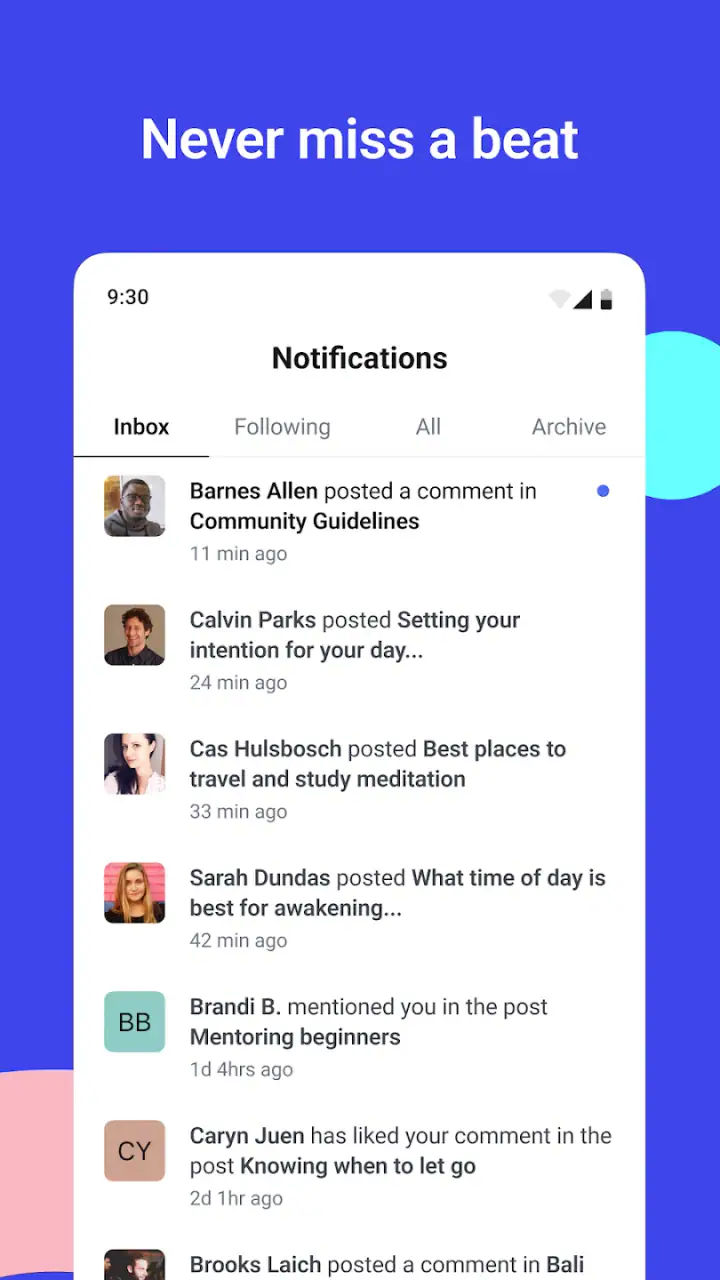
- Customizable notifications to suit preferences.
- Robust privacy settings for user protection.
- Minimal battery consumption during usage.
Cons
- Limited offline functionality.
- Occasional ads can disrupt experience.
- Some features require in-app purchases.
- Initial setup can be slightly complex.
- Limited support for older devices.


